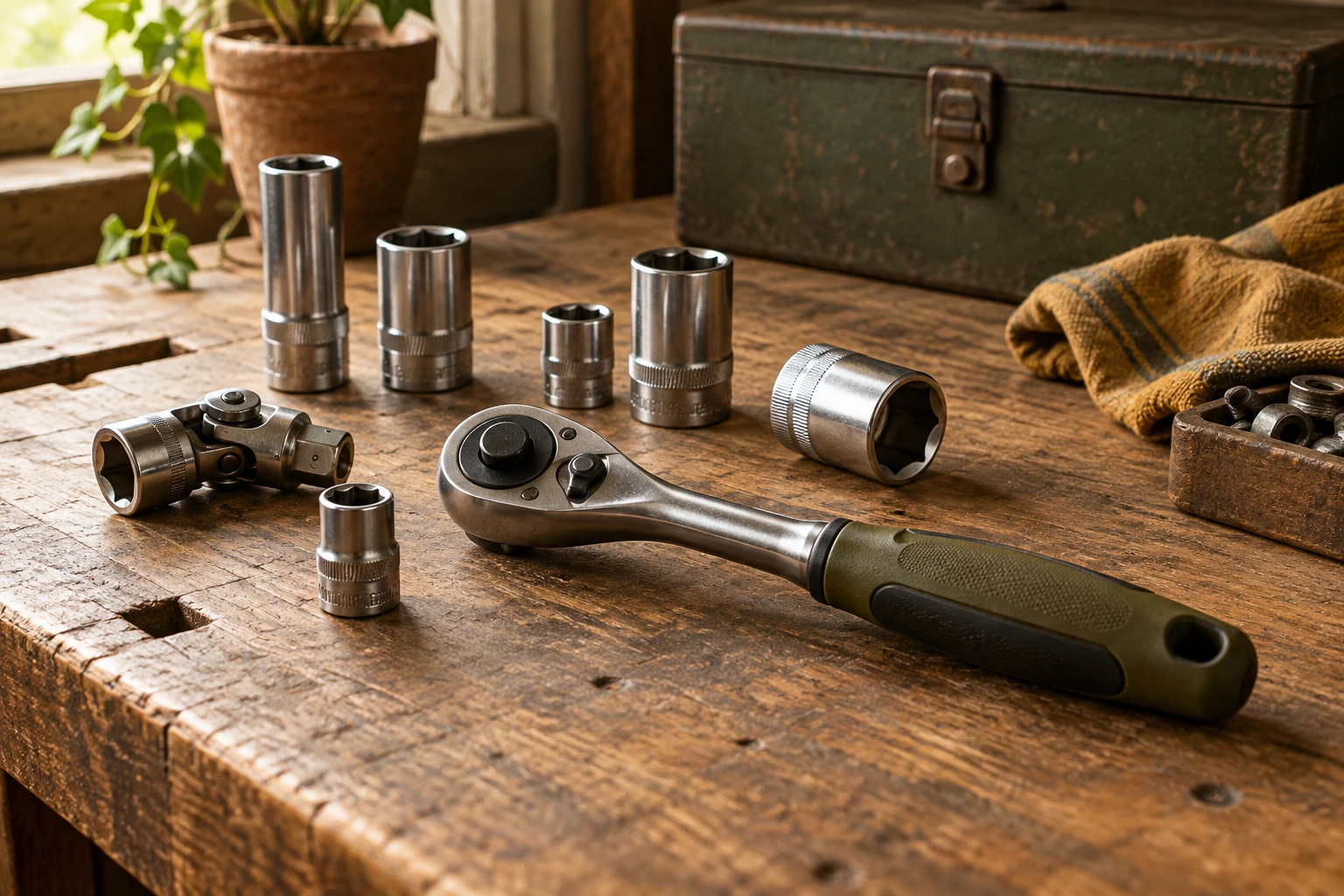
Choose a screwdriver tip that matches the fastener
Keep the profile, size, holder and intended use together. A similar-looking cross or hexagon is not a complete fit specification.
Updated:
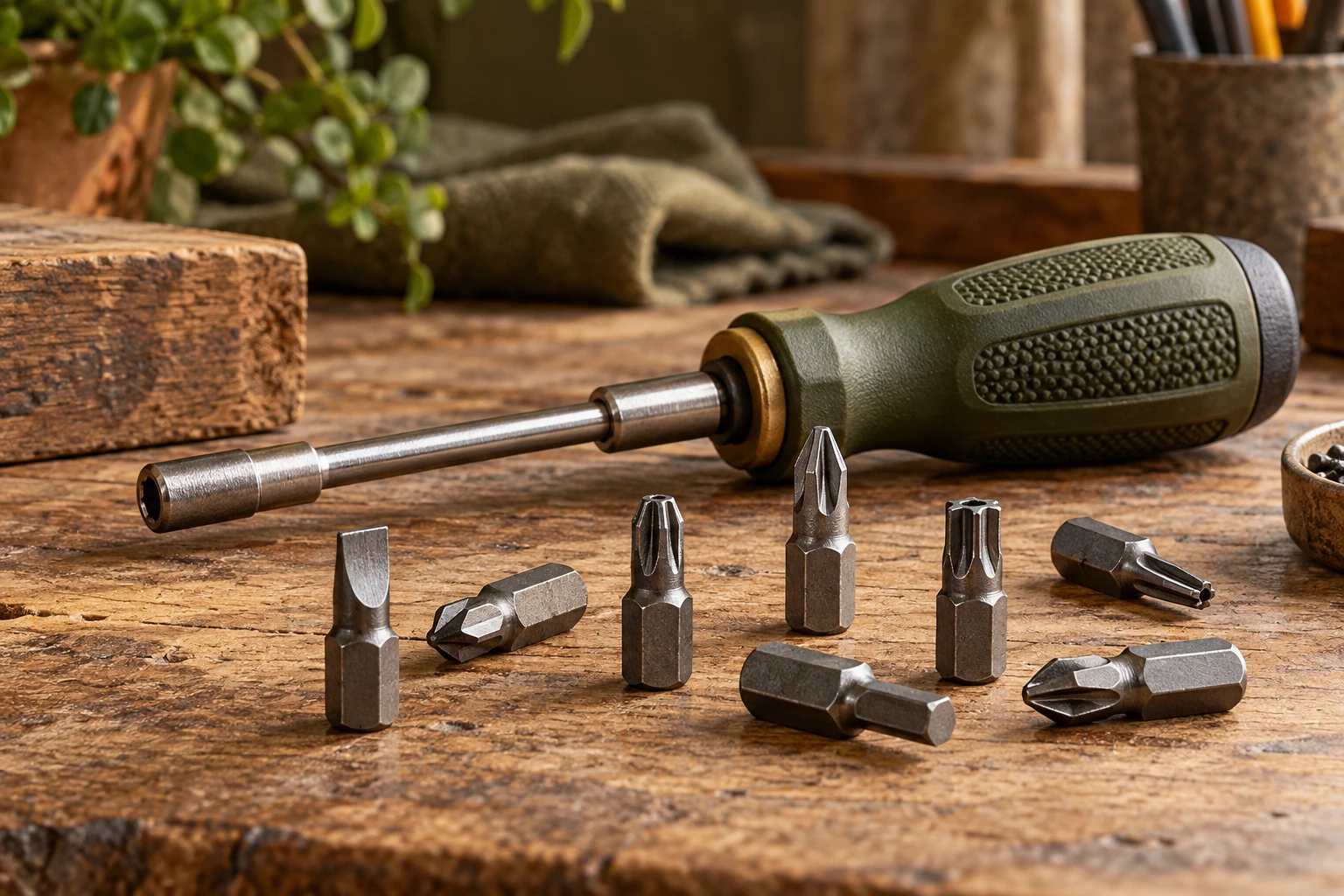
Identify the fastener profile before buying a tip
Choose the named tip profile and size specified for the fastener, then verify the holder and intended application. Slotted, Phillips, Pozidriv, hex and other named profiles are not simply alternative names for a generic screwdriver. A vague listing such as cross-head leaves an important part of the decision unresolved.
Use the fastener or equipment documentation and the accessory’s complete description. A worn recess or a low-resolution photograph may make identification uncertain. This guide is a purchase checklist, not a method for forcing an uncertain tip into a damaged fastener or applying power to a safety-critical connection.
STANLEY UK screwdriver product range ?
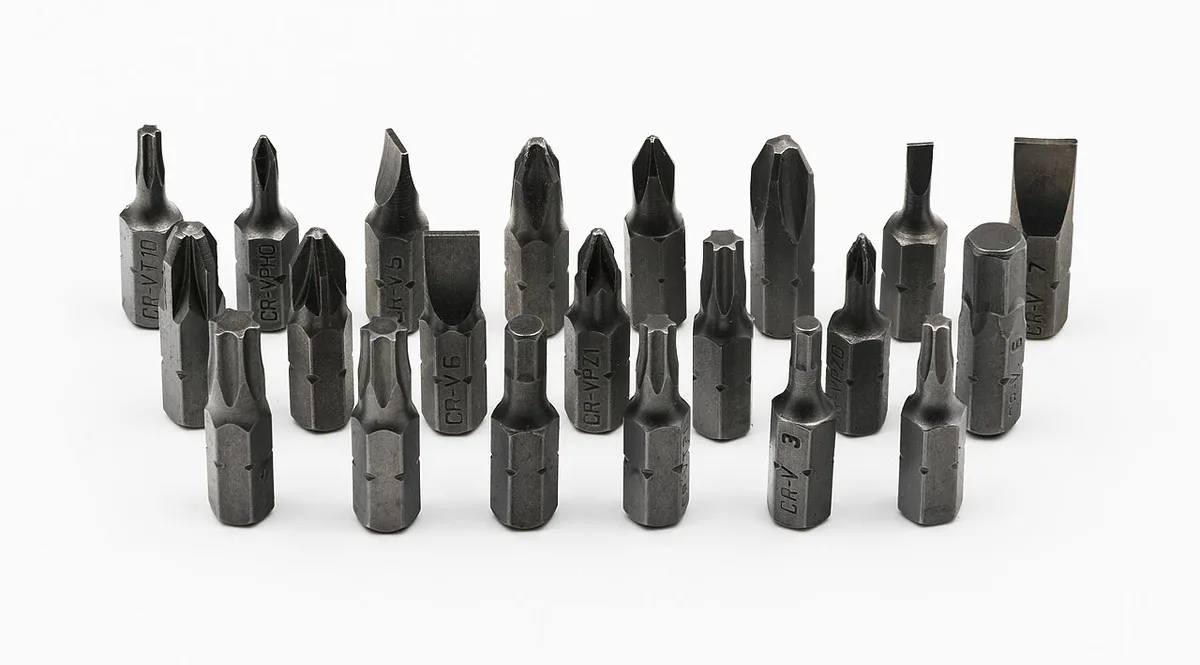
Keep family and size together
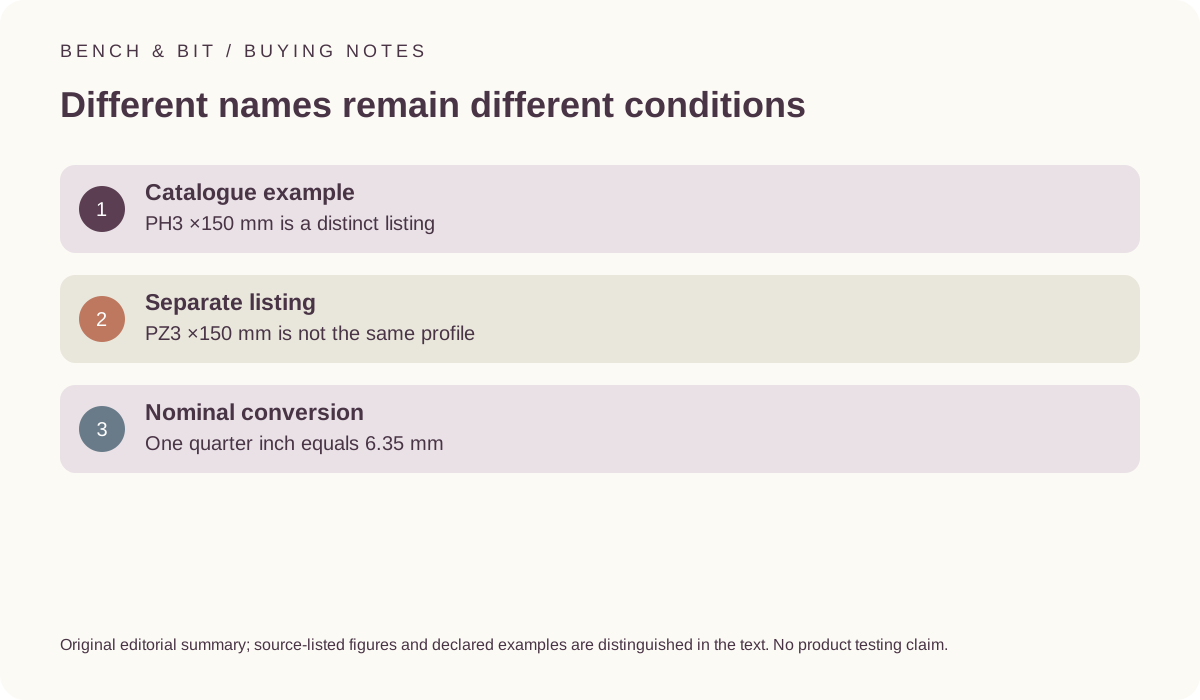
STANLEY’s UK range separately lists PH3×150 mm and PZ3×150 mm screwdrivers. These are manufacturer catalogue descriptions, not our measurements. The shared size number and length wording do not erase the distinction between the named profile families. The exact product code remains part of the identification.
Likewise, a set of hexagonal tips can contain several sizes. The real photographs make that physical variety visible without proving fit from perspective. Record both profile and size rather than describing a tip only as small, medium or a colour used by one particular manufacturer.
STANLEY UK screwdriver product range ?
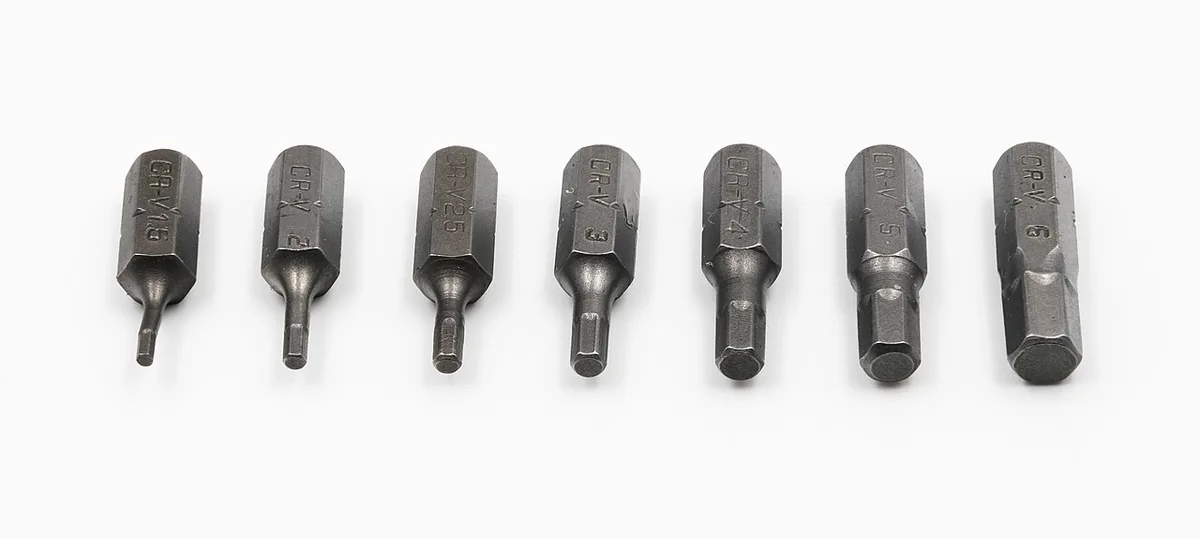
Separate the tip from its connection to the holder
The fastener-engaging end is not the same specification as the end retained by a handle or powered tool. A nominal quarter-inch connection converts to 6.35 mm using 25.4 mm per inch, but that arithmetic does not establish the complete shape, retention or approved use of an accessory.
Identify the proposed handle or tool and the exact bit or holder together. A product can look similar yet belong to a different system or application. Do not infer impact suitability merely from the ability to enter a holder; keep any explicit manufacturer permission with the purchase record.
Compare useful coverage rather than a large assortment
List the fastener profiles and sizes actually required by your household equipment or intended task. Then compare the set’s written component inventory. Repeated sizes, holders, extensions and a case can all increase a headline piece count without broadening the useful tip coverage you need.
A smaller documented assortment may answer your task better than a larger ambiguous one. Preserve the difference between something absent from the set and something included but unsuitable for the intended tool. We have no live price feed or hands-on wear test that would justify ranking every set by value or durability.
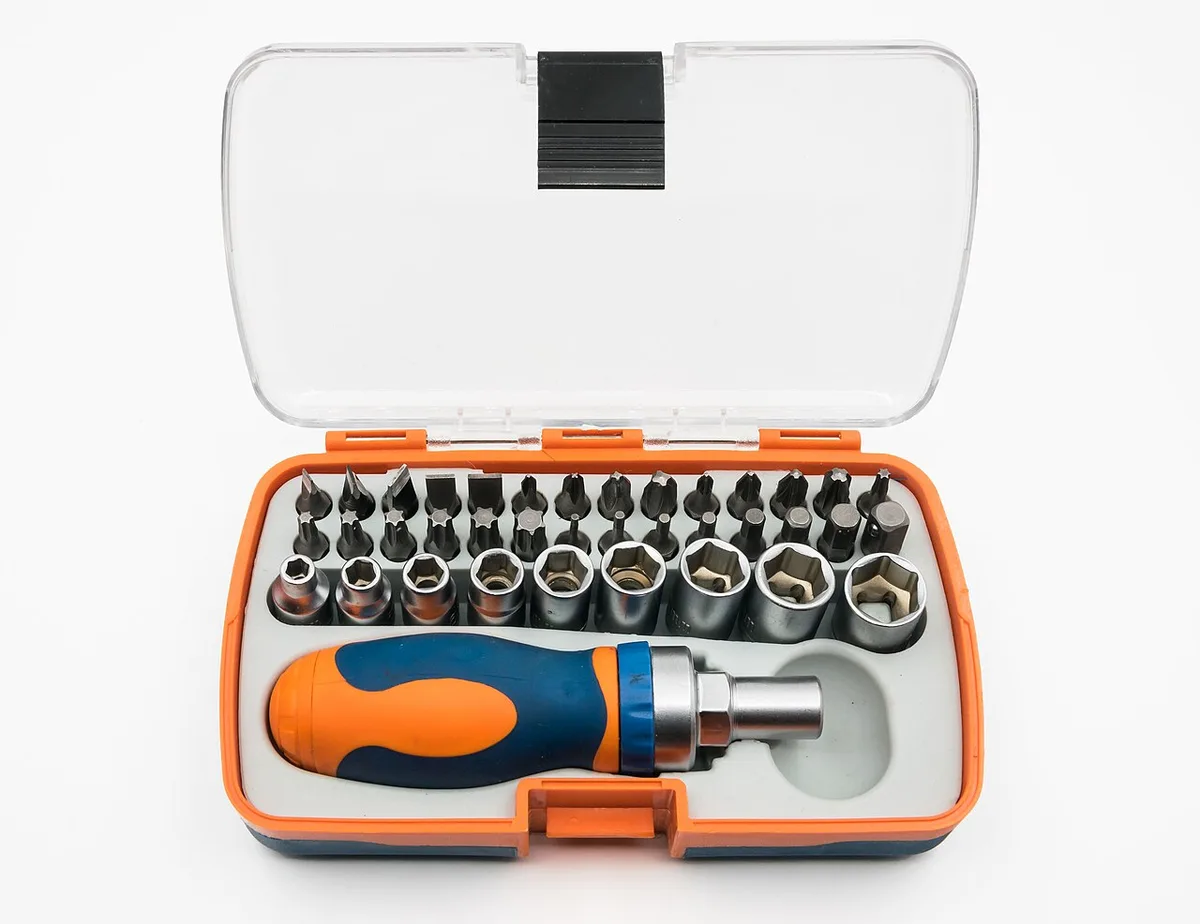
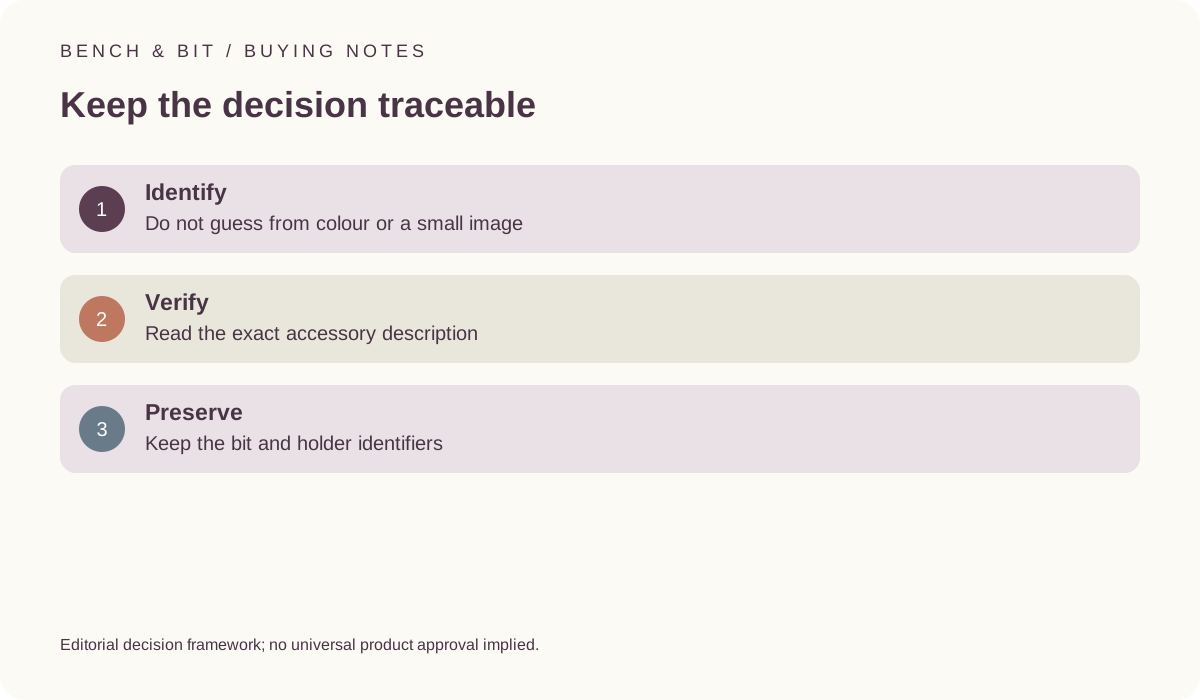
Keep the selection traceable after the purchase
Save the accessory code, the profile and size, the intended application and the relevant holder or tool identifier. Keep the full instructions available, especially when a powered application is proposed. The three source photographs illustrate separate physical originals rather than our testing or a currently recommended bundle.
If an important fit condition remains uncertain, obtain the appropriate product information before choosing. A unit conversion and a plausible shape cannot settle a missing permission. This page does not choose an operating torque, approve a repair or show how to remove a damaged fastener.